Life lessons from Stav, part 2, The Web of Orlog
Published: Mon, 04/27/26
Life lessons from Stav – Part 2: The Web of Orlog

Introduction
At the Spirit of Awen camp last year I met a lady who had a tattoo of the nine interlocking sticks prominently displayed on (as I recall) her upper arm. When I asked her about it she proudly told me that the design represented the web of wyrd. Quite a lot of people are under the impression that this particular image of three vertical lines intersected with three more laid high left to low right and yet another three from high right to low left is some ancient Viking symbol rather like the Valknut. However, there is apparently archaeological evidence of the three interlocking triangles which makes up the Valknut starting with the Stora Hammars stone in Gotland, Sweden which may date from the 7th Century. (1.) By contrast, the representation of the web as we have it in Stav in the public domain only dates back to the early 1990s.
Stanza 140 in the Havamal refers to Odin or Hos receiving ‘nine spells’ following his ordeal of hanging for nine nights on a ‘high windy tree’. The Stav tradition can see these ‘spells’ as ‘Urds Weaving’ of the nine lines or staves into the familiar pattern in which every rune can be found if you look for them. (2.) A version of this pattern was used on the cover of the paperback edition of Helrunar by Jan Fries in 1997. Ivar had introduced me to the concept of the web of Orlog at the start of my Stav training and I incorporated the graphic and some explanation of its significance into my book on Stav as a martial art which I published in 1995. So, it is likely that any time you see the Web of Orlog in the public domain, or tattooed on someone’s skin, it was my book that put it there. Either way, if anyone has managed to gain any understanding of the web through Stav then I am pleased for them, as I have found the concept extremely useful ever since I was introduced to it. The first thing to realise about the web is that we only see it in two dimensions in an image because paper (or a computer screen) is flat. The Hagl, as the basic building block of the web, actually has five lines and ten ends rather than the three and six that you see in a two dimensional image. The web should be seen in four dimensions as it also maps time as well as space, I will illustrate the time element below. Here are three of the ways that the concept of the Web of Orlog, or Urd’s Weaving, has helped me:1. Construction
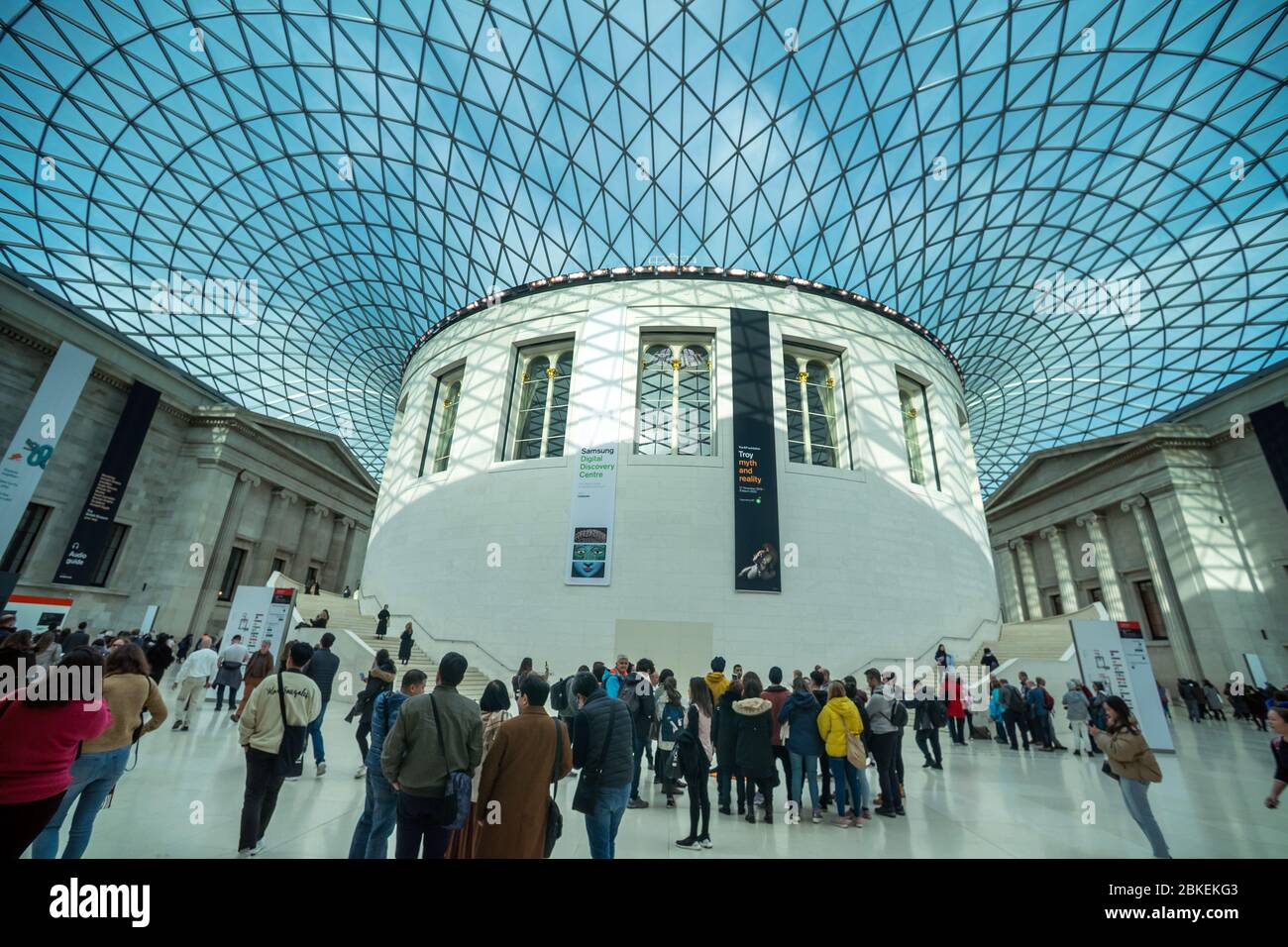
As a handyman who often builds, or rebuilds, structures I can see why a recent construction may blow down in a strong wind and yet a great cathedral, or similar historical edifice, may stand for centuries surviving hurricanes and even earth quakes. A building will only stand if it has been constructed according to the lines of the web. Not all cathedrals were built with this awareness and quite a few spires have fallen over the centuries. Where we live in Beverly we have a very fine minster which has stood since around 1400 CE. However, in the centre of the roof there is a flat area where you could land quite a large helicopter. Over the centuries there have been at least three structures which have not stood the test of time.For a modern example of construction in conformity with the structure of the web visit the Great Court at the British Museum which was completed in 2000CE. (3.) Whether you are building a great tower, or just putting up a tent, an understanding of the web will enable to you to sleep on a stormy night.
2. Destruction (without necessarily hurting anyone)
A tree grows according to the lines of the web. The more wind and weather it has to contend with the stronger it will be. If you wish to cut down a tree then you will need a sharp axe. However, if you just hit the side of the trunk at 90 degrees to the stem all that you will do is damage the bark. In order to cut into the wood you need to strike at an angle of about 45 degrees. Alternate the cuts on this angle and you will eventually chop through the trunk. Once cut down the wood can be split along the vertical lines of the web. You may think that a saw can cut at 90 degrees to the lines of the grain. However, if you carefully examine the teeth of the saw you will see that the alternating teeth each cut at the same angle as the axe has to. Japanese swordsmen perfect their cutting against bamboo sticks or rolled mats. A successful cut will perfectly follow the line of the web. Clearing brushwood with a machete can teach exactly the same lesson. The lines of the web apply to the structure of the human body as much as they do to the growth of a tree and a sharp blade will have a similar effect as on wood. However, you can exploit the lines of the web within the human body to collapse structure and break balance without actually doing any physical damage at all.3. Chaos Points
Sufficient study of, and practice with, the web may bring you to the point where you can see the lines as making up a map in time and space. The points where the lines meet are where one movement ends and another begins. These are points of most vulnerability and when the greatest opportunity to make changes and take a new direction occur. An example is driving on a motorway where it is very difficult and dangerous to leave a carriage way once you have left a slip road. However, at the next junction you can leave via the slip road and the roundabout will give you the option of leaving the motorway, possibly with a choice of several different directions. However, you are probably more likely to have an accident on the roundabout than on a carriage way. It is also impossible to get lost while you are on a stretch of motorway, however anything can happen if you take the wrong exit at the junction.
In combat it is unwise to meet a committed attack head on. Just judge the moment where a forward movement has exhausted its momentum and has not quite started the next action. This opportunity may last a fraction of a second but it is always there. If you can develop the awareness, judgement, and intuition to catch such moments, or chaos points when anything is possible, then even a much stronger opponent can be managed if not defeated. Conversely, being aware of such points in time and space enables us to minimise our risk of harm or exploitation.
Conclusion
Stav is commonly described as ‘knowledge of the rune staves’. Stav can equally well be explained as awareness of the web for which the runes are both keys, and signposts, with which to access and navigate the lines and their intersections.
Regards
Graham
21 Beaver Road
Beverley East Yorkshire HU17 0QN
UNITED KINGDOM
Unsubscribe | Change Subscriber Options